お盆
Obon
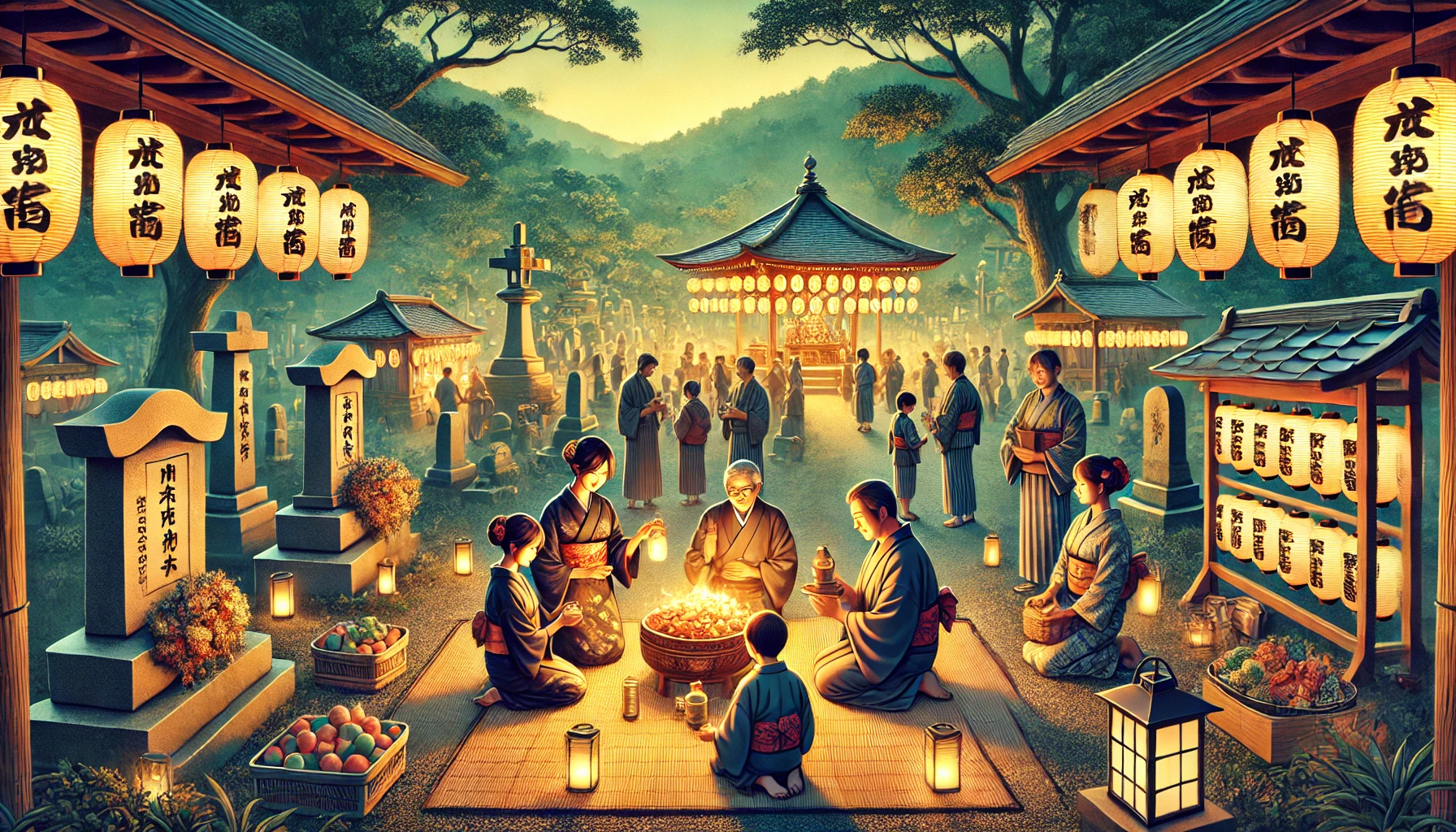
お盆は日本の伝統的な行事で、先祖を供養するための特別な時期です。
Obon is a traditional Japanese event, a special time of year for making offerings to ancestors.
毎年8月中旬に行われることが多く、特に8月13日から15日が一般的です。
It is usually held in mid-August each year, especially from August 13 to 15.
この期間、人々は実家に帰り、先祖の霊を迎えたり送り出したりするための儀式を行います。
During this period, people return to their parents' homes and hold ceremonies to welcome and send off the spirits of their ancestors.
お盆の間、多くの家庭では仏壇に供物を供えたり、提灯を飾ったりします。
During Obon, many families place offerings on Buddhist altars and decorate lanterns.
また、お墓参りに行き、先祖に感謝の気持ちを伝えるのも重要な行事です。
It is also important to visit graves and express gratitude to ancestors.
地域によっては、迎え火や送り火といった独自の風習があります。
Some regions have their own customs such as welcoming and sending off fires.
これらの火は先祖の霊が迷わないように道を照らす役割を果たします。
These fires serve to light the way so that the spirits of ancestors do not get lost.
さらに、お盆踊りという伝統的な踊りも行われます。
In addition, a traditional dance called Bon Odori is also held.
盆踊りは、地域のコミュニティで開催され、祭りのような雰囲気の中で行われることが多いです。
Bon dances are often held in local communities and take place in a festive atmosphere.
踊りを通じて先祖とつながり、感謝を示すと同時に、地域の人々との交流を深める機会となります。
It is an opportunity to connect with one's ancestors and show gratitude through dancing, as well as an opportunity to deepen one's relationship with others in the community.
お盆は、家族や先祖との絆を再確認する大切な行事であり、日本文化の重要な一部です。
Obon is an important event that reaffirms the bonds with family and ancestors and is an important part of Japanese culture.
この時期、日本全国で特別な風習や行事が見られるため、外国人にとっても日本の伝統を知る良い機会と言えます。
Special customs and events can be found throughout Japan during this time of year, and it is a good opportunity for foreigners to learn about Japanese traditions.
Comprehension Check
Question 1 of 4
お盆の主な目的は何ですか?