ウイルス
Viruses
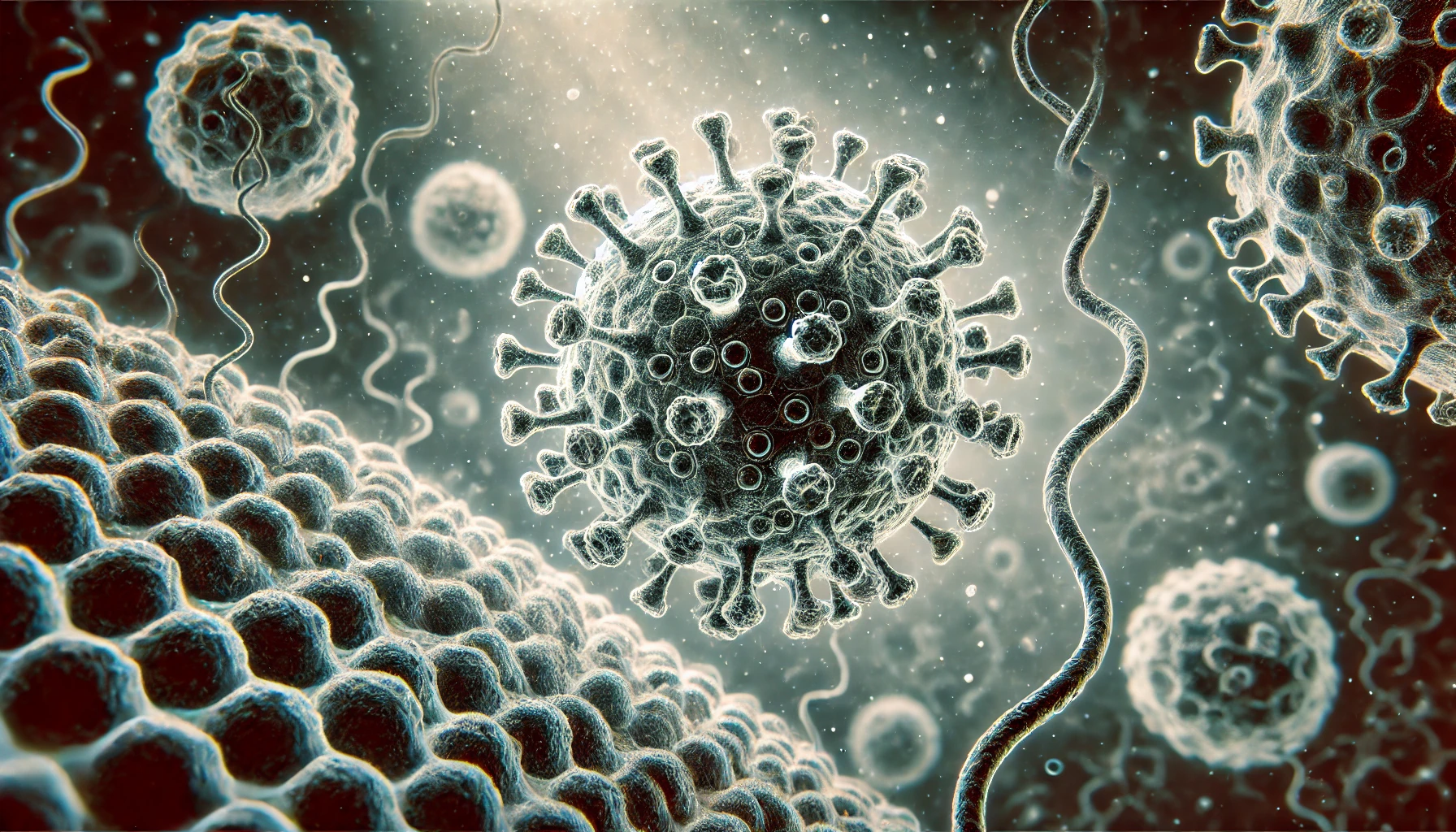
ウイルスは非常に小さい微生物で、生物の細胞に侵入して増殖する特徴を持っています。
Viruses are very small microorganisms that have the characteristic of invading and multiplying in the cells of living organisms.
ウイルスは自分自身でエネルギーを作ることができず、他の生物の細胞を利用しなければなりません。
Viruses cannot produce energy on their own and must utilize the cells of other organisms.
このため、ウイルスは単独では生きられないと言われています。
For this reason, viruses are said to be unable to survive on their own.
多くのウイルスは人間や動物に感染し、病気を引き起こします。
Many viruses infect humans and animals and cause disease.
例えば、インフルエンザや風邪、また最近では新型コロナウイルスなどが知られています。
Examples include influenza, the common cold, and more recently, the new coronavirus.
ウイルスは接触や飛沫、空気などを通じて広がることが多いため、予防が重要です。
Prevention is important because viruses are often spread through contact, droplets, and air.
予防のためには、手洗いやマスクの着用、またワクチン接種が有効です。
Prevention includes washing hands, wearing masks, and vaccination.
特に、免疫力が弱い人々はウイルスに感染しやすいため、健康管理に気を付ける必要があります。
People with weak immune systems are particularly vulnerable to the virus and should take care of their health.
ウイルスに対する研究は今も進められており、新しい治療法や予防法の開発が期待されています。
Research on the virus is still ongoing, and new treatments and prevention methods are expected to be developed.
科学者たちはウイルスの仕組みを解明することで、未来の感染症を防ぐ手段を模索しています。
Scientists are seeking ways to prevent future infections by understanding how viruses work.
Comprehension Check
Question 1 of 4
ウイルスが単独では生きられないと言われる理由は何ですか?