カジュアルな日本語
Casual Japanese
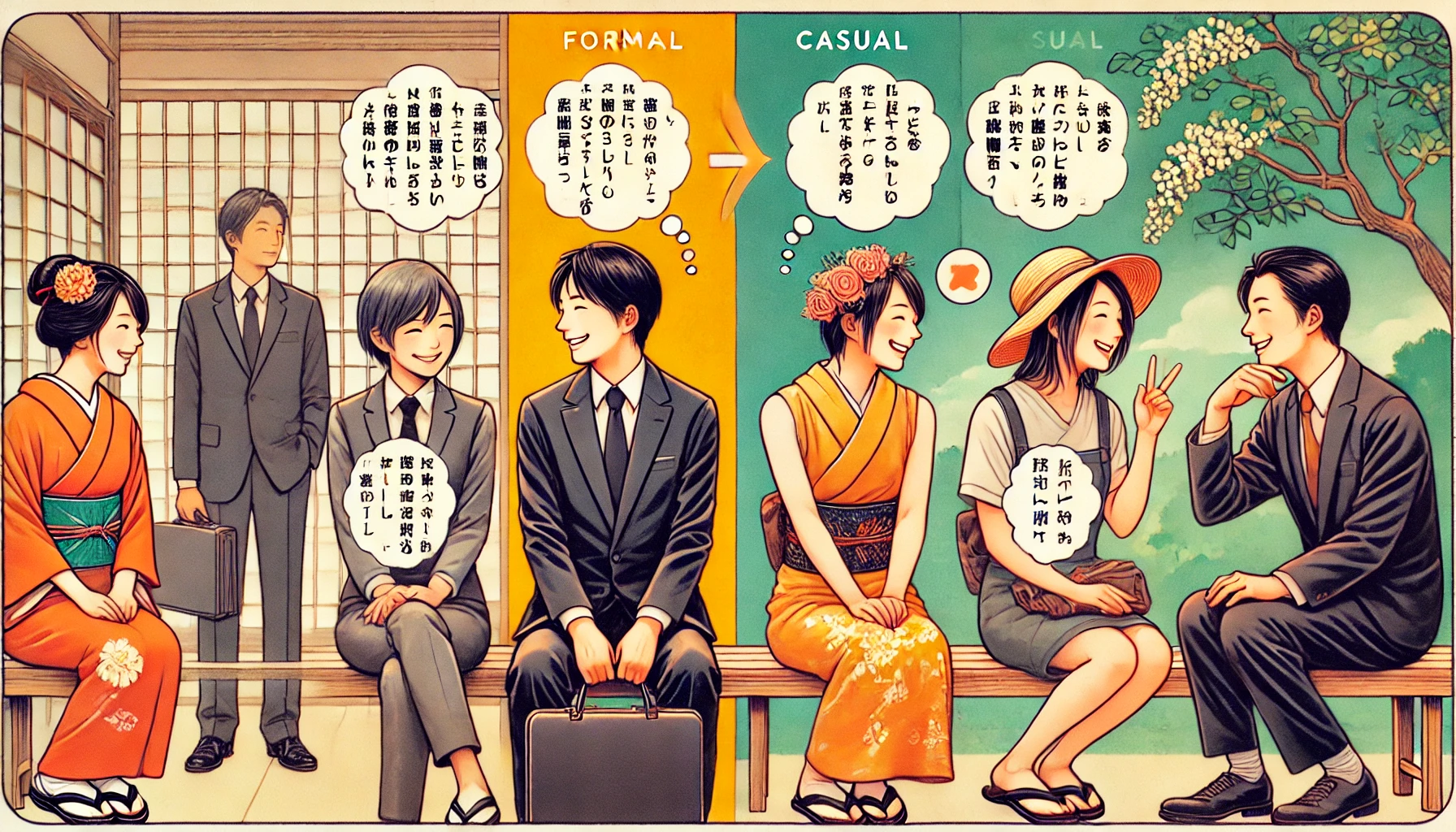
日本語には、フォーマルな話し方とカジュアルな話し方があります。
Japanese has both formal and informal ways of speaking.
フォーマルな日本語は、仕事や初対面の人と話すときに使います。
Formal Japanese is used for work and when speaking with people you have never met before.
一方、カジュアルな日本語は、友達や家族と話すときによく使います。
On the other hand, casual Japanese is often used when talking with friends and family.
例えば、「ありがとう」はカジュアルな表現ですが、フォーマルに言うと「ありがとうございます」になります。
For example, "arigato" is a casual expression, but when said formally, it becomes "arigato gozaimasu."
また、「ごめん」はカジュアルで、「ごめんなさい」はフォーマルです。
Also, "gomen" is casual, while "gomennasai" is formal.
カジュアルな日本語では、よく文を短くします。
In casual Japanese, sentences are often shortened.
例えば、「行く」と言うと、「行きますか」よりもカジュアルな感じがします。
For example, "iku?" is more informal than "ikimasuka?"
さらに、語尾に「ね」や「よ」をつけて、気持ちを伝えることも多いです。
Furthermore, we often add "ne" or "yo" at the end of a word to convey our feelings.
友達と話すときにカジュアルな日本語を使うと、自然で親しい雰囲気になります。
Using casual Japanese when talking with friends creates a natural and friendly atmosphere.
でも、使いすぎると失礼になることもあるので、相手や場面に合わせることが大切です。
However, using it too much can be rude, so it is important to adapt it to the other person and the situation.
カジュアルな日本語を勉強すると、会話がもっと楽しくなります!
Learning casual Japanese will make your conversations more enjoyable!
Comprehension Check
Question 1 of 3
When is casual Japanese commonly used?