ソクラテスの哲学
Socratic Philosophy
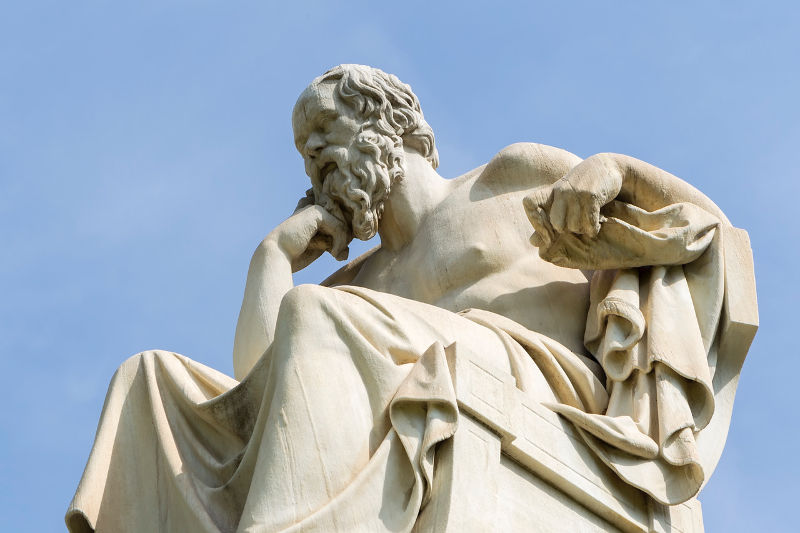
ソクラテスは、古代ギリシャの哲学者であり、西洋哲学の基礎を築いた人物として知られています。
Socrates was an ancient Greek philosopher and is known as the man who laid the foundation of Western philosophy.
彼の思想と方法論は、その後の哲学の発展に多大な影響を与えましたが、彼自身は著作を残さなかったため、主に弟子であるプラトンの著作を通じてその哲学が伝えられています。
His ideas and methodology had a profound influence on the subsequent development of philosophy, but since he himself did not leave any writings, his philosophy has been transmitted mainly through the works of his disciple Plato.
ソクラテスの哲学の核心は、「無知の知」という概念に集約されます。
The core of Socrates' philosophy is summed up in the concept of knowledge of ignorance.
彼は人間が自らの無知を認識することの重要性を説きました。
He taught the importance of man's awareness of his own ignorance.
ソクラテスはしばしば「自分が何も知らないことを知っている」と述べ、知識への探求を永遠に未完のものと捉えました。
Socrates often stated that I know that I know nothing, and he viewed the quest for knowledge as eternally unfinished.
この姿勢は、当時の知識人たちの傲慢さを批判するものであり、同時に人間の知的謙虚さを強調するものでした。
This attitude was a criticism of the arrogance of the intellectuals of his time, while at the same time emphasizing the intellectual humility of human beings.
また、ソクラテスは「問答法(ディアレクティケー)」を用いて哲学的対話を進めました。
Socrates also promoted philosophical dialogue by using the method of questioning (diarectikē).
この方法は、対話を通じて相手の矛盾を引き出し、より深い真理に迫るためのものです。
This method is designed to draw out contradictions in the other person through dialogue in order to get at deeper truths.
彼は決して自分の知識や意見を押し付けるのではなく、相手自身に考えさせることで理解を促しました。
He never imposed his own knowledge or opinion, but encouraged understanding by letting the other person think for himself.
この「産婆術」とも呼ばれる方法論は、単なる議論の技術ではなく、魂の成長と倫理的な自己省察を目的としたものでした。
This methodology, also known as birthing technique, was not merely a debating technique, but was intended for the growth of the soul and ethical self-reflection.
倫理において、ソクラテスは「徳(アレテー)」が人間の幸福にとって不可欠であると考えました。
In ethics, Socrates considered virtue (aletheia) to be essential to human happiness.
彼にとって、善悪の判断は知識に基づくものであり、真の知識を持つ者は悪を行わないと主張しました。
For him, the judgment of right and wrong was based on knowledge, and he argued that those with true knowledge would not do evil.
この考え方は、徳を知識と同一視する「知徳合一」の概念として知られています。
This idea is known as the concept of knowledge and virtue unification, which equates virtue with knowledge.
ソクラテスはこれを基にして、自己の魂を正しく導くためには、他者との対話を通じて倫理的真理を探求することが必要であると説きました。
On this basis, Socrates taught that in order to guide one's own soul properly, it is necessary to search for ethical truths through dialogue with others.
しかし、ソクラテスの哲学は当時のアテネ社会において反発を招きました。
However, Socrates' philosophy caused a backlash in Athenian society at the time.
若者を堕落させ、国家の神々を否定したとされる彼は告発され、死刑を宣告されます。
He was accused of corrupting the youth and denying the gods of the state, and was sentenced to death.
それでも彼は、自らの信念を曲げることなく毒杯を仰ぎ、その死をもって哲学者としての一貫性を示しました。
Nevertheless, he never wavered in his convictions and demonstrated his consistency as a philosopher with his death.
この姿勢は後の哲学者たちに多大な影響を与え、彼の思想は永遠に語り継がれることとなりました。
This stance had a profound influence on later philosophers, and his ideas will be passed down forever.
ソクラテスの哲学は、単なる知識の追求ではなく、人間としてどう生きるべきかという根源的な問いを投げかけるものであり、現代においてもその普遍的な価値を失っていません。
Socrates' philosophy is not merely a pursuit of knowledge, but asks fundamental questions about how we should live as human beings, and has not lost its universal value even today.
彼の問いかける精神は、哲学を生きた実践として考えることの意義を私たちに示してくれます。
His spirit of inquiry shows us the significance of considering philosophy as a living practice.
Comprehension Check
Question 1 of 4
ソクラテス自身の著作が残っていないにもかかわらず、その哲学が伝わっている主な理由は何ですか?