フォーマルな日本語
Formal Japanese
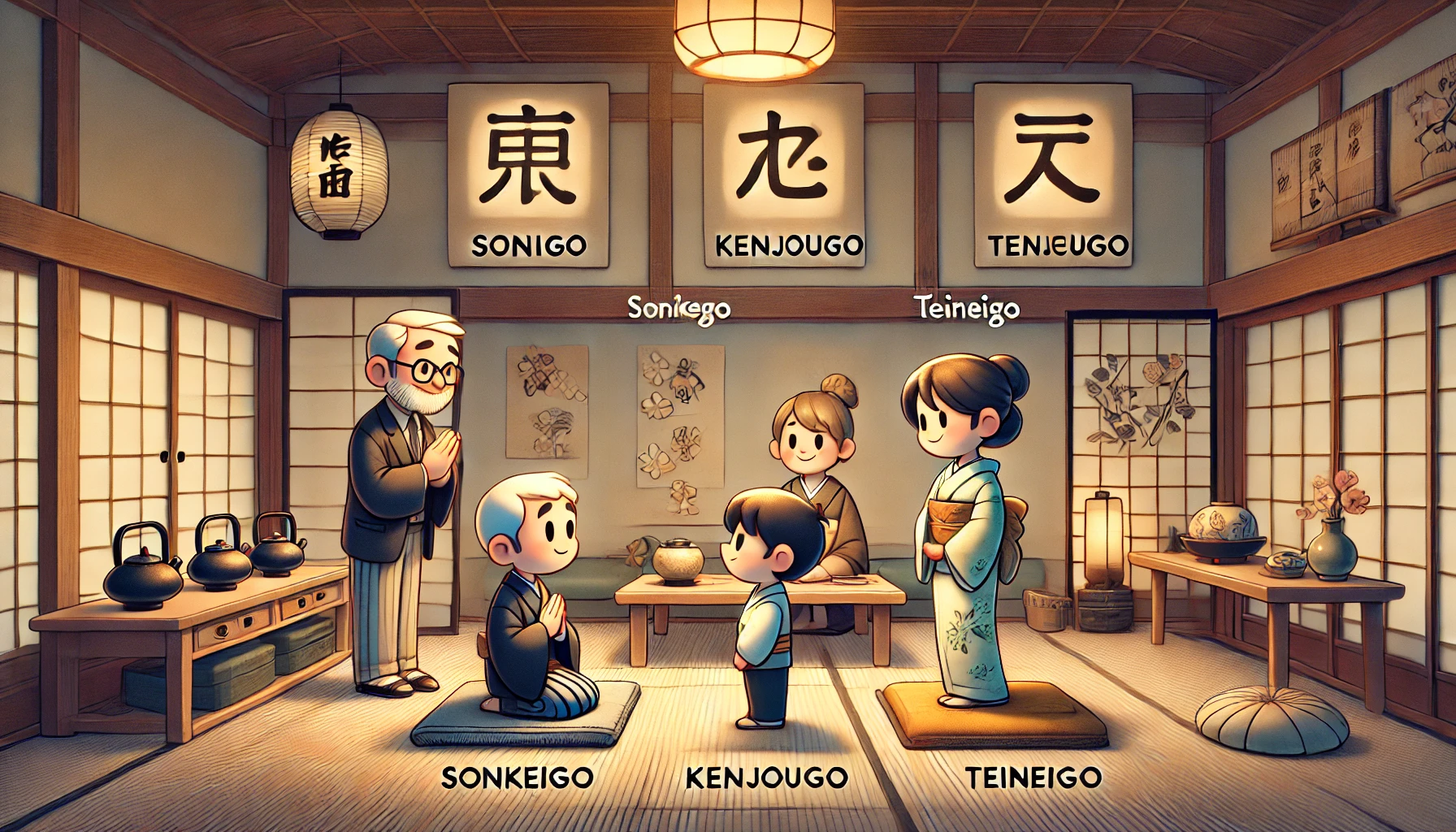
フォーマルな日本語は、丁寧さを表すために使われます。
Formal Japanese is used to express politeness.
仕事の場や、初めて会う人と話すときにとても大切です。
It is very important at work or when speaking to someone you are meeting for the first time.
フォーマルな日本語には「敬語」が含まれます。
Formal Japanese includes "keigo" (honorific expressions).
「敬語」には3つの種類があります。
There are three types of honorifics.
それは「尊敬語」、「謙譲語」、そして「丁寧語」です。
These include "honorific," "humble," and "polite."
「尊敬語」は、相手の行動や状態を敬うときに使います。
Honorifics are used to respect an action or state of another person.
例えば、「行く」は「いらっしゃる」になります。
For example, "iku" becomes "irassharu".
「謙譲語」は、自分や自分のグループの行動をへりくだるときに使います。
Humble language is used when you or your group is being condescending about your actions.
「行く」は「参る」になります。
For example, "iku" becomes "mairu."
「丁寧語」は、話し方を丁寧にするための表現です。
Polite speech is used to make your speech more polite.
「行く」は「行きます」になります。
The word "iku" becomes "ikimasu."
フォーマルな日本語を使うと、相手に良い印象を与えることができます。
Using formal Japanese can make a good impression on others.
しかし、使い方を間違えると失礼になることもあるので、注意が必要です。
However, if you use it incorrectly, it can be rude.
日本語を学ぶときは、文脈に合わせた言葉遣いを練習することが大切です。
When learning Japanese, it is important to practice using words in context.
Comprehension Check
Question 1 of 3
When is formal Japanese especially important?