マルクス主義
Marxism
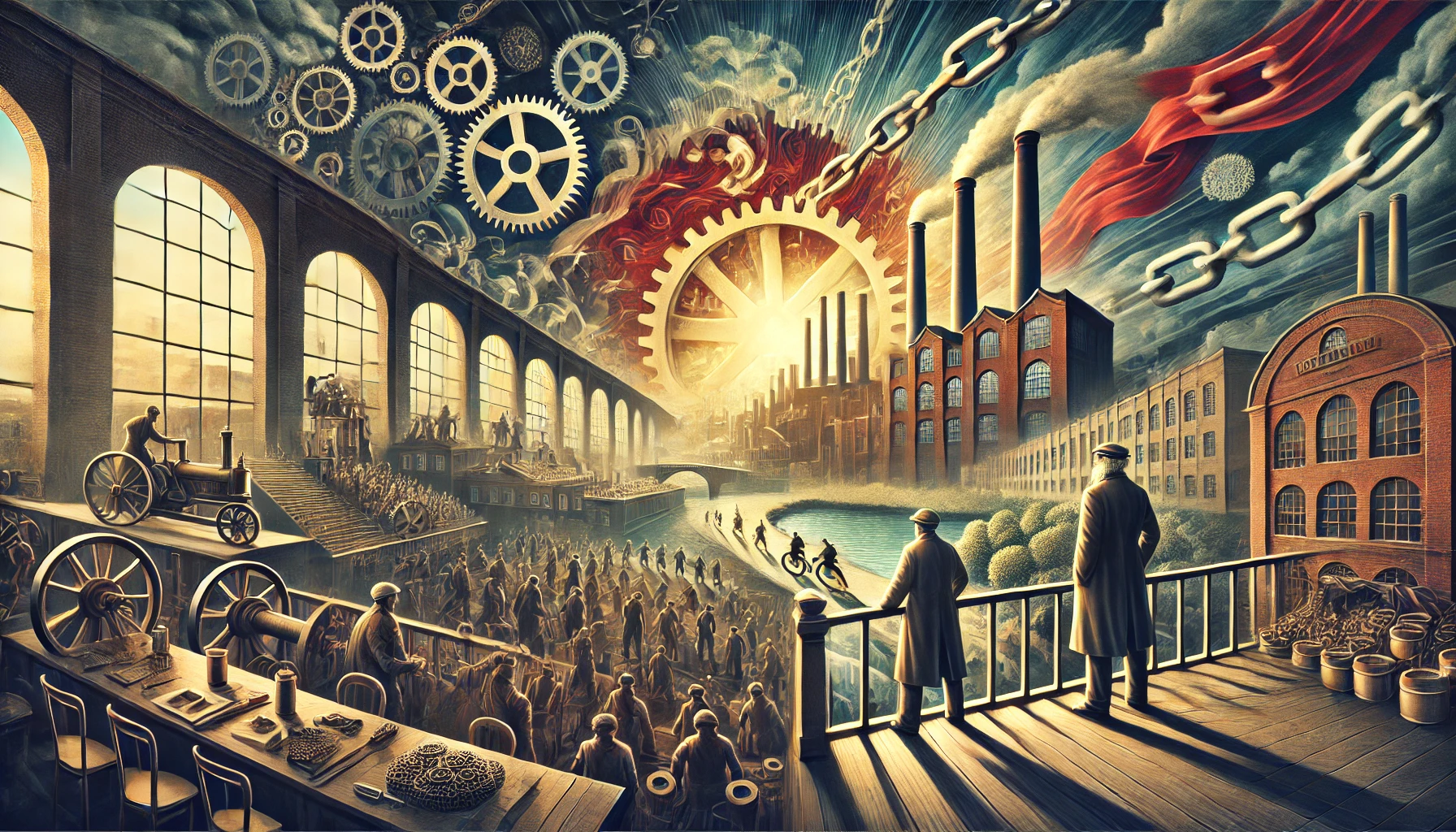
マルクス主義は、19世紀にカール・マルクスとフリードリヒ・エンゲルスによって発展された経済的、社会的、哲学的な思想体系である。
Marxism is a system of economic, social, and philosophical thought developed by Karl Marx and Friedrich Engels in the 19th century.
この理論は、資本主義の矛盾を批判し、労働者階級による革命を通じて新しい社会秩序を構築することを目指している。
The theory criticizes the contradictions of capitalism and aims to construct a new social order through revolution by the working class.
マルクス主義の中心的な概念には、階級闘争、労働価値説、および資本主義の崩壊に関する歴史的唯物論が含まれる。
Central concepts of Marxism include class struggle, labor theory of value, and historical materialism regarding the collapse of capitalism.
マルクス主義によれば、社会は支配階級と被支配階級の間の対立によって構成されており、この対立が歴史の進展を駆動する原動力であるとされる。
According to Marxism, society is constituted by the conflict between the ruling class and the ruled class, and this conflict is the driving force of historical progress.
資本主義経済においては、資本家階級(ブルジョワジー)が生産手段を支配し、労働者階級(プロレタリアート)はその労働力を提供することを余儀なくされている。
In a capitalist economy, the capitalist class (bourgeoisie) controls the means of production and the working class (proletariat) is forced to provide its labor force.
この不均衡な関係は、搾取と疎外を生み出し、社会的不平等を拡大させる原因となる。
This unbalanced relationship creates exploitation and alienation and is the cause of growing social inequality.
また、マルクスは資本主義が内在的な矛盾を抱えていると主張した。
Marx also argued that capitalism has inherent contradictions.
その一つは、利潤追求のための生産力の拡大が、市場の飽和や経済危機を引き起こすという点である。
One of these is that the expansion of productive forces in pursuit of profit leads to market saturation and economic crises.
このような矛盾は、最終的に資本主義の崩壊を導き、社会主義および共産主義へと移行する道筋を描くと考えられている。
Such contradictions are believed to ultimately lead to the collapse of capitalism and chart a course toward socialism and communism.
しかし、マルクス主義はその後の歴史的展開において多くの批判や修正を受けてきた。
However, Marxism has been subject to many criticisms and modifications in its subsequent historical development.
例えば、20世紀の共産主義国家の運営における実践と、理論の乖離が指摘されることが多い。
For example, it is often pointed out that there is a divergence between the theory and the practice in the operation of communist states in the 20th century.
それにもかかわらず、マルクス主義は現代においても社会的不平等や資本主義の欠陥を考察する上で重要な理論的枠組みとして広く参照されている。
Nonetheless, Marxism is still widely referenced today as an important theoretical framework for examining social inequality and the flaws of capitalism.
このように、マルクス主義は単なる過去の思想ではなく、経済的、社会的現象を理解するための強力な分析ツールとして今日でも多くの影響を与え続けている。
Thus, Marxism is not merely an idea of the past, but continues to exert much influence today as a powerful analytical tool for understanding economic and social phenomena.
Comprehension Check
Question 1 of 4
マルクス主義では歴史を動かす原動力を何に求めますか?