冷戦
The Cold War
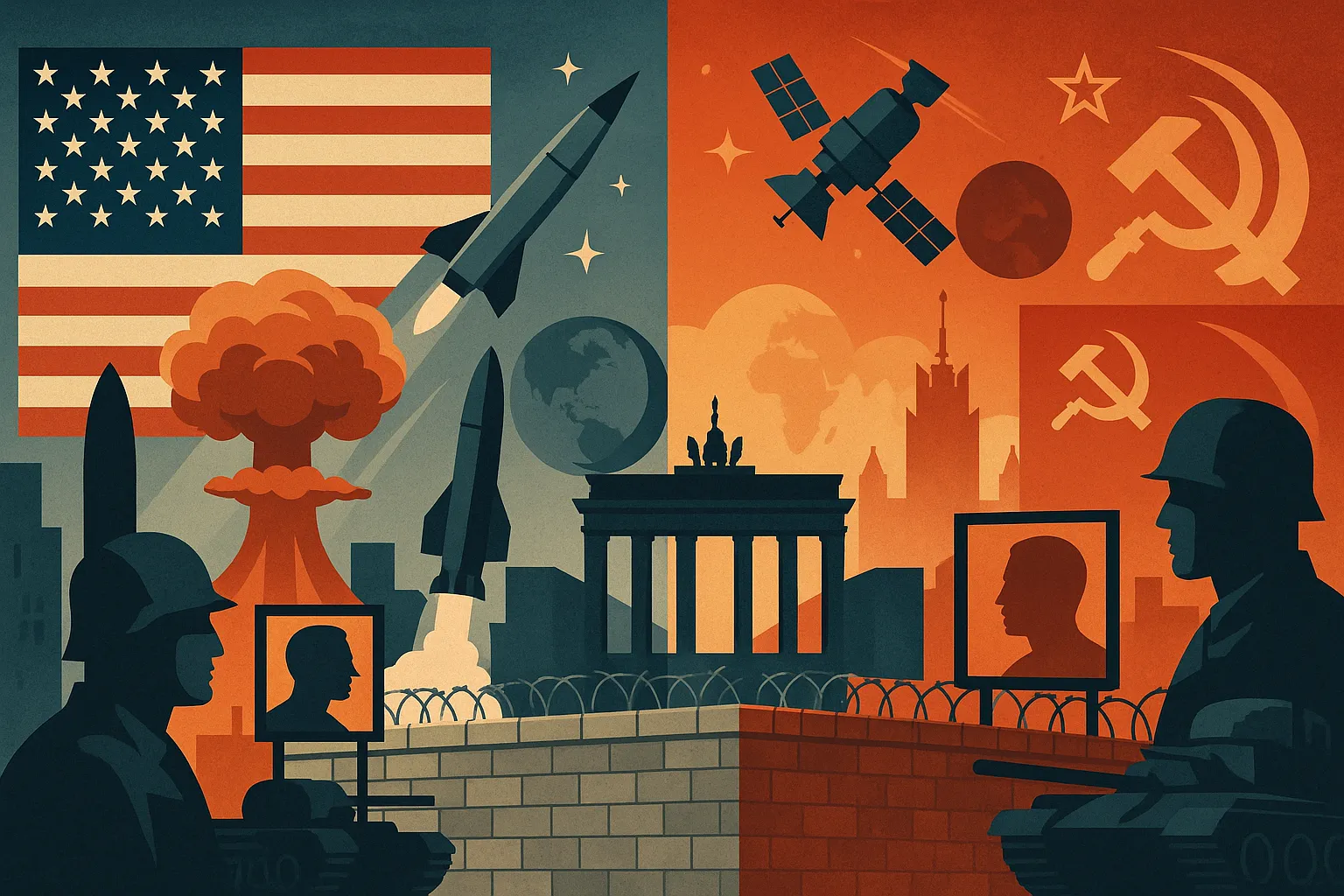
冷戦とは、第二次世界大戦後に始まり、主にアメリカとソビエト連邦(ソ連)の間で展開された政治的、経済的、軍事的な対立のことを指します。
The Cold War refers to the political, economic, and military confrontation that began after World War II and developed primarily between the United States and the Soviet Union (USSR).
この対立は、直接的な戦争を伴わず、主にイデオロギーの違いに基づいていました。
This conflict did not involve direct warfare and was primarily based on ideological differences.
アメリカは自由主義と資本主義を推進する一方、ソ連は共産主義と計画経済を支持していました。
The United States promoted liberalism and capitalism, while the Soviet Union favored communism and a planned economy.
冷戦の期間中、世界は大きく二つの陣営に分かれました。
During the Cold War, the world was divided into two main camps.
西側諸国はアメリカを中心とし、NATO(北大西洋条約機構)を結成しました。
The Western powers, led by the United States, formed NATO (North Atlantic Treaty Organization).
一方、東側諸国はソ連を中心にワルシャワ条約機構を設立しました。
On the other hand, the countries of the East, led by the Soviet Union, established the Warsaw Pact Organization.
このような軍事同盟の形成は、世界中の緊張を高める結果となりました。
The formation of these military alliances resulted in heightened tensions around the world.
冷戦の象徴的な出来事の一つは、ベルリンの壁の建設です。
One of the symbolic events of the Cold War was the construction of the Berlin Wall.
この壁は東西ドイツを分断し、東側の共産主義と西側の自由主義の境界線を物理的に示していました。
This wall divided East and West Germany and physically marked the boundary between communism in the East and liberalism in the West.
また、核兵器の開発競争も冷戦の重要な側面でした。
Another important aspect of the Cold War was the race to develop nuclear weapons.
アメリカとソ連は互いに核兵器を増強し、相手国に対する優位性を保とうとしました。
The U.S. and the Soviet Union sought to maintain their superiority over the other by building up each other's nuclear arsenals.
この「核の均衡」は、全面戦争を防ぐ一方で、常に緊張を伴うものでした。
This "nuclear balance," while preventing all-out war, was always fraught with tension.
また、冷戦は直接的な戦闘を避けながらも、代理戦争を通じて多くの地域に影響を与えました。
The Cold War also affected many regions through proxy wars while avoiding direct combat.
例えば、朝鮮戦争やベトナム戦争は、冷戦の一環として展開されました。
For example, the Korean War and the Vietnam War were waged as part of the Cold War.
これらの戦争は、当事国だけでなく、周辺国や一般市民にも大きな犠牲をもたらしました。
These wars caused heavy casualties not only to the countries involved, but also to neighboring countries and civilians.
冷戦は1989年のベルリンの壁崩壊、そして1991年のソ連の解体によって終結しました。
The Cold War ended with the fall of the Berlin Wall in 1989 and the dissolution of the Soviet Union in 1991.
しかし、その影響は現在の国際政治にも残っています。
However, its effects remain in international politics today.
冷戦後の世界では、経済や安全保障の新たな課題が浮上し、冷戦時代の教訓をどのように活かすかが問われています。
In the post-Cold War world, new economic and security challenges have emerged, and the question is how to apply the lessons of the Cold War era.
冷戦は現代史の重要な一章であり、その理解は今日の国際社会を考える上で欠かせません。
The Cold War is an important chapter in modern history, and understanding it is essential to today's international society.
Comprehension Check
Question 1 of 4
冷戦の対立の中心にあったものとして本文が挙げるのは何ですか?