家畜化
Domestication
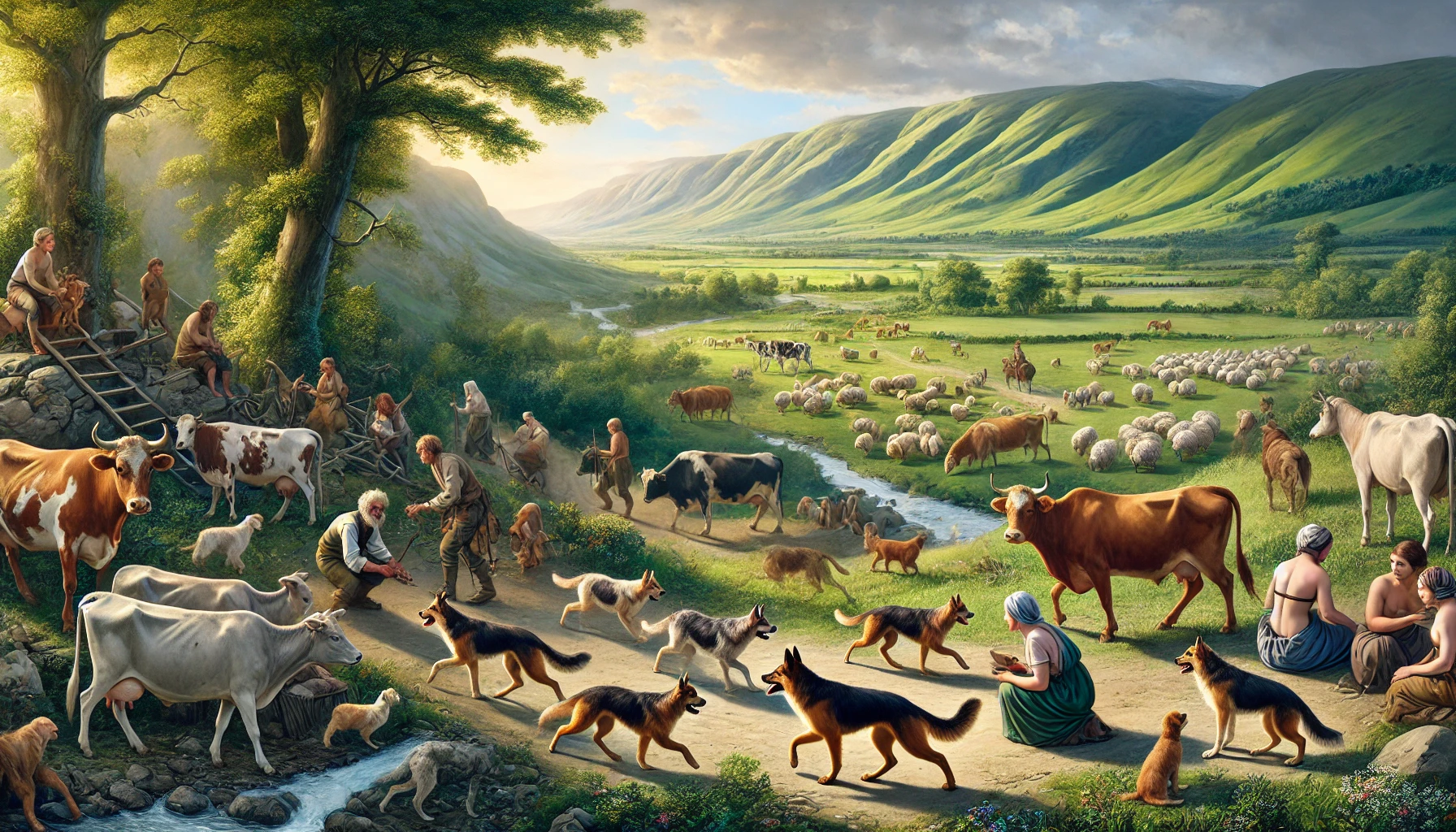
家畜化とは、動物を人間の生活に役立てるために、長い時間をかけて人間に慣らし、育てることを指します。
Domestication refers to the process of acclimating and raising animals over a long period of time to make them useful in human life.
このプロセスは数千年前に始まりました。
This process began thousands of years ago.
たとえば、犬は狼から家畜化され、狩猟や警備、家族の一員として重要な役割を果たすようになりました。
For example, dogs were domesticated from wolves and came to play important roles as hunters, guards, and family members.
同様に、牛や羊は食料や衣類の材料を提供するために家畜化されました。
Similarly, cattle and sheep were domesticated to provide food and clothing material.
家畜化にはいくつかの要因が関係しています。
Several factors contributed to domestication.
まず、人間にとって便利な特徴を持つ動物が選ばれました。
First, animals were chosen for their characteristics that were useful to humans.
たとえば、性格が穏やかで、集団生活を好む動物は家畜化が容易でした。
For example, animals with gentle personalities and a preference for group living were easy to domesticate.
また、人間が動物に食料や安全な環境を提供し、その代わりに労働力や資源を得るという相互利益の関係が生まれました。
Also, a mutually beneficial relationship emerged in which humans provided the animals with food and a safe environment, and in return received labor and resources.
しかし、家畜化には課題もあります。
However, domestication has its challenges.
一部の動物は自然の生態系から切り離され、人間の管理下でしか生きられなくなりました。
Some animals have become detached from their natural ecosystems and can only live under human control.
また、遺伝的な多様性が失われることで、病気に対する耐性が弱まる危険性もあります。
There is also the risk that the loss of genetic diversity will weaken resistance to disease.
それでも、人間と動物が協力して生活するこの仕組みは、現在も多くの文化や産業で重要な役割を果たしています。
Nevertheless, this system of cooperative living between humans and animals still plays an important role in many cultures and industries today.
家畜化は単なる技術ではなく、人間と自然の深い関係を示す象徴でもあります。
Domestication is not just a technology, but a symbol of the deep relationship between humans and nature.
この関係を理解し、尊重することが、持続可能な未来につながる鍵となるでしょう。
Understanding and respecting this relationship is the key to a sustainable future.
Comprehension Check
Question 1 of 4
家畜化とはどのような過程ですか?