文化を超えたドラゴン
Dragons Across Cultures
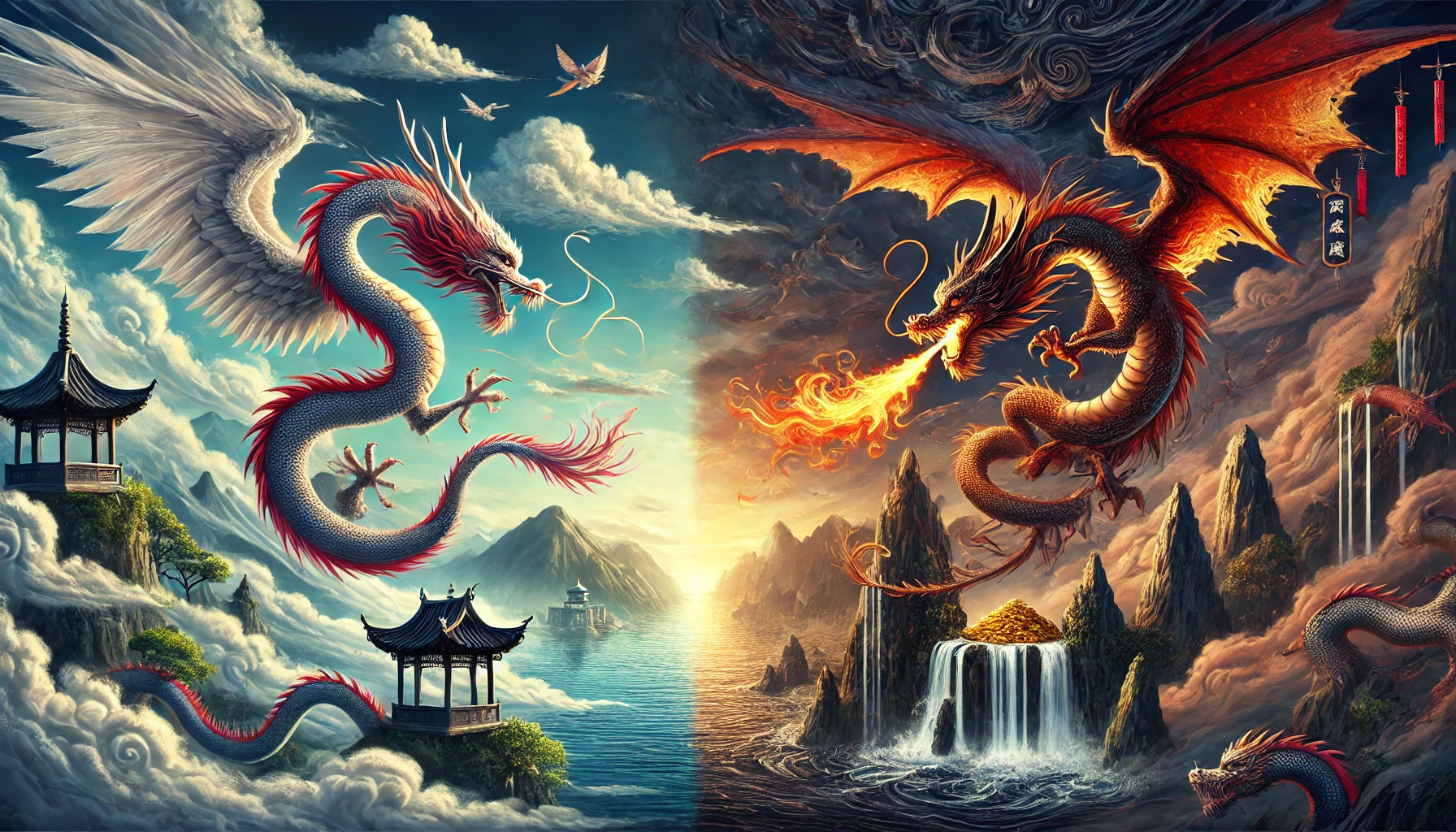
ドラゴンは多くの文化において重要な存在であり、その姿や意味は地域によって異なる。
Dragons are important in many cultures, and their appearance and meaning vary from region to region.
例えば、中国や日本などの東アジアでは、ドラゴン(龍)はしばしば水や天候を司る神聖な存在とされる。
For example, in East Asia, including China and Japan, dragons are often considered sacred beings that govern water and weather.
龍は長い体とひげを持ち、空を自由に飛び回る姿で描かれることが多い。
Dragons are often depicted as having long bodies and whiskers and flying freely in the sky.
特に日本では、龍は神道や仏教と深い関係があり、神社や寺院の装飾として用いられることがある。
Especially in Japan, dragons are deeply associated with Shintoism and Buddhism, and are sometimes used as decorations for shrines and temples.
龍神信仰も古くからあり、農業や漁業の成功を祈る対象として敬われてきた。
There is also a long-standing belief in the dragon god, which has been revered as an object of prayer for success in agriculture and fisheries.
一方、西洋ではドラゴンはしばしば恐ろしい怪物として描かれる。
In the West, on the other hand, dragons are often depicted as fearsome monsters.
例えば、中世ヨーロッパの伝説では、ドラゴンは火を吹き、勇敢な騎士によって倒されるべき存在として登場する。
For example, in medieval European legends, dragons were fire-breathing beings to be slain by brave knights.
これらのドラゴンは金銀財宝を守る存在としても知られ、欲望や危険の象徴とされることが多い。
These dragons are also known as guardians of gold and silver treasures and are often symbols of lust and danger.
このように、ドラゴンは東西で全く異なる性質を持ちながらも、それぞれの文化において重要なシンボルとして受け入れられている。
Thus, while dragons have very different qualities in the East and West, they are accepted as important symbols in each culture.
東洋では調和や繁栄を象徴し、西洋では勇気や挑戦を表す存在として語られることが多い。
In the East, they symbolize harmony and prosperity, while in the West they are often spoken of as representing courage and challenge.
この違いを比較することで、文化ごとの価値観や自然観をより深く理解することができるだろう。
By comparing these differences, we can better understand the values and views of nature in each culture.
Comprehension Check
Question 1 of 4
東アジアのドラゴンはどのように描かれることが多いですか?