日本の季節
Japanese Seasons
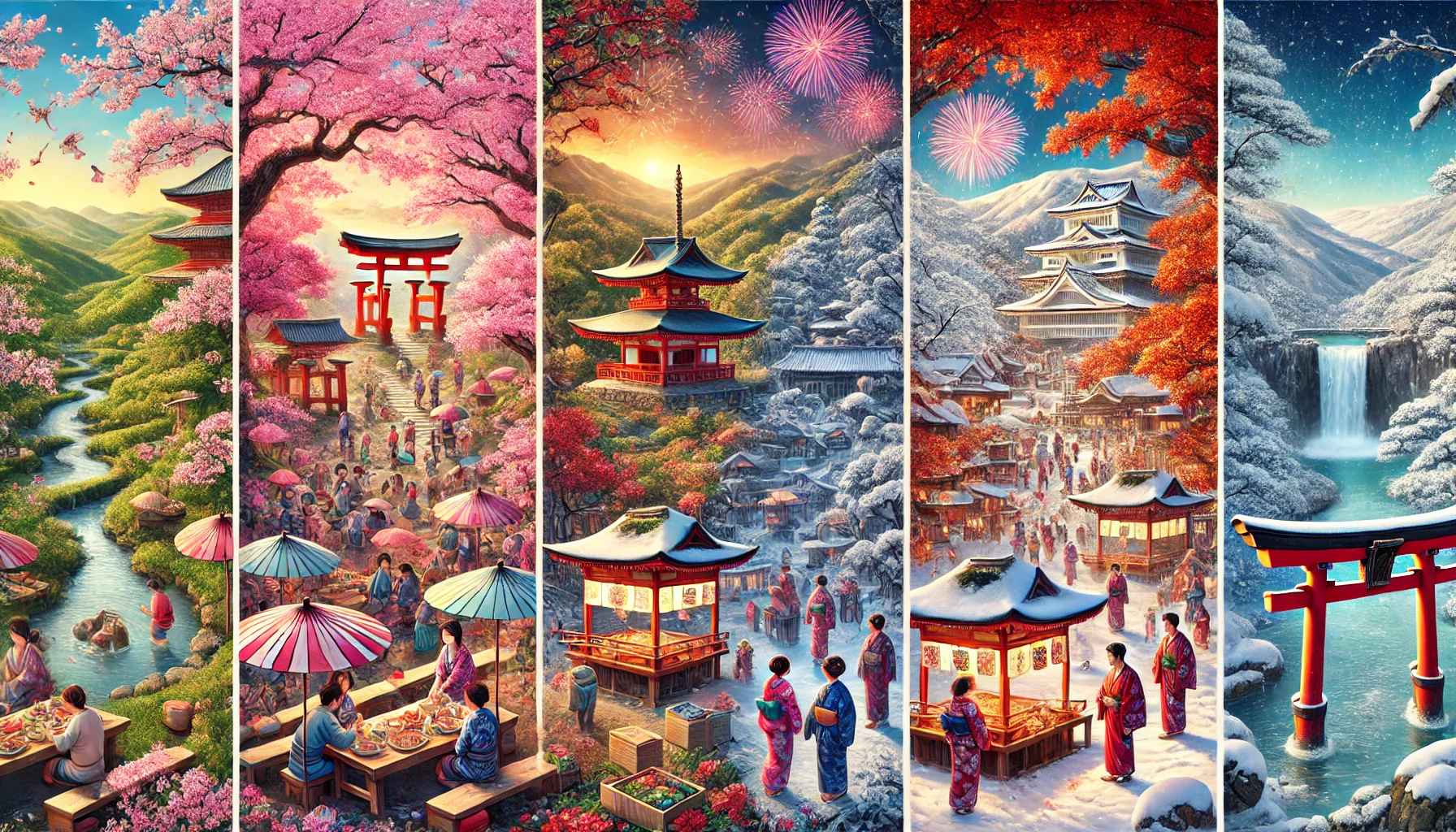
日本の季節は文化的にとても重要です。
The seasons are culturally very important in Japan.
春、夏、秋、冬、それぞれが独自の魅力を持っています。
Spring, summer, fall, and winter each have their own unique charm.
春は桜の季節で、花見が伝統的な行事です。
Spring is the season of cherry blossoms, and hanami is a traditional event.
家族や友人と公園で桜を見ながらお弁当を楽しむのは、日本らしい体験です。
Enjoying a boxed lunch with family and friends in a park while viewing the cherry blossoms is a uniquely Japanese experience.
夏は祭りや花火大会で賑やかです。
Summer is lively with festivals and fireworks displays.
浴衣を着て屋台を巡り、かき氷やたこ焼きを楽しむのが人気です。
Wearing yukata (light cotton kimono) and visiting food stalls to enjoy shaved ice and takoyaki (octopus dumplings) are popular.
また、お盆では先祖を供養する風習もあります。
There is also the custom of making offerings to ancestors during Obon.
秋は紅葉が美しい季節です。
Autumn is the season of beautiful autumn leaves.
京都や日光など、紅葉の名所を訪れる人が多いです。
Many people visit Kyoto, Nikko, and other places famous for their autumn foliage.
また、秋は実りの季節でもあり、柿や栗などの秋の味覚を楽しめます。
Autumn is also the season of harvest, and people can enjoy the autumn flavors such as persimmons and chestnuts.
冬はお正月が最大のイベントです。
In winter, New Year's Day is the biggest event.
神社に初詣をし、新しい年の幸運を祈ります。
People pay their first visit to shrines and pray for good luck in the new year.
また、温泉に入って雪景色を眺めるのは冬ならではの楽しみです。
In addition, taking a hot spring bath and admiring the snowy landscape is a unique winter pleasure.
このように、日本の季節は自然や伝統行事と深く結びついており、それぞれの時期に特別な体験ができます。
In this way, the seasons in Japan are deeply connected with nature and traditional events, and each season offers special experiences.
四季を通じて日本文化の豊かさを感じることができるでしょう。
You will be able to experience the richness of Japanese culture throughout the four seasons.
Comprehension Check
Question 1 of 3
What traditional activity is associated with spring?