日本庭園
Japanese Gardens
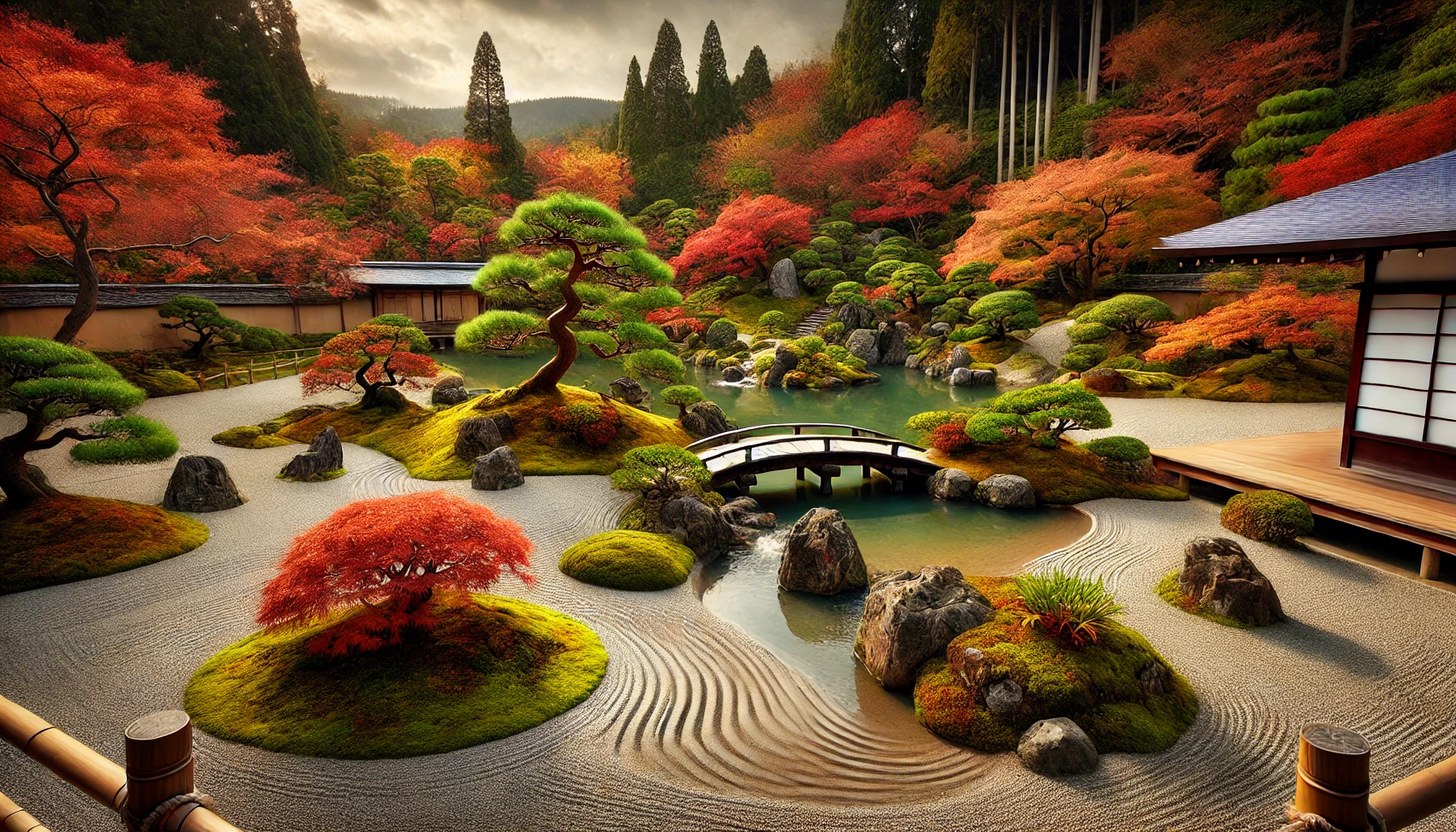
日本庭園は、日本の伝統文化を象徴する美しい景観デザインの一つです。
Japanese gardens are one of the most beautiful landscape designs that symbolize traditional Japanese culture.
その特徴は、自然の景観を模倣しながらも、細部に至るまで綿密に計算された配置にあります。
Its distinctive feature is its meticulously calculated arrangement, which imitates the natural landscape, yet is meticulously designed down to the smallest detail.
庭園内には、石、苔、砂、水、そして植物が調和して配置され、静けさや季節感を表現しています。
Within the garden, stones, moss, sand, water, and plants are arranged harmoniously to express tranquility and a sense of the seasons.
日本庭園には主に3つの種類があります。
There are three main types of Japanese gardens.
一つ目は「枯山水」で、主に禅寺で見られる庭園です。
The first is the "karesansui," or dry landscape garden, which is found mainly in Zen temples.
このタイプの庭園では、水を用いず、砂や石で山や川を象徴的に表現します。
In this type of garden, water is not used, and sand and stones are used to symbolically represent mountains and rivers.
二つ目は「池泉庭園」で、池を中心に配置し、水の流れや景色を楽しむことが目的です。
The second is a "pond garden," which is arranged around a pond and is intended to enjoy the flow of water and scenery.
この庭園は歩きながら眺める「回遊式庭園」として設計されることが多いです。
This garden is often designed as a "kaiyushiki garden" where visitors can walk around and enjoy the scenery.
三つ目は「露地」で、茶室と共に設けられる庭園です。
The third type of garden is an "open-air garden," which is designed in conjunction with a tea ceremony room.
露地は、茶道の精神である「和敬清寂」を体現する場として重要視されます。
The dew ground is considered important as a place to embody the spirit of the tea ceremony, "harmony, respect, purity, and solitude.
また、日本庭園の美しさは四季によって変化します。
The beauty of a Japanese garden changes with the seasons.
春の桜、夏の新緑、秋の紅葉、冬の雪景色といった自然の移り変わりが庭園に独特の風情をもたらします。
The changes in nature, such as cherry blossoms in spring, fresh greenery in summer, autumn leaves in fall, and snowy landscape in winter, bring a unique atmosphere to the garden.
このような変化を楽しむことは、日本人の自然観や美意識に深く根付いています。
Enjoying these changes is deeply rooted in the Japanese view of nature and aesthetics.
日本庭園はただの装飾ではなく、静けさの中に自分を見つめ直す場でもあります。
Japanese gardens are not mere decoration, but also a place to reflect on oneself in tranquility.
そのため、日本庭園は観賞だけでなく、心を落ち着ける場としても大切にされています。
For this reason, Japanese gardens are valued not only for viewing, but also as a place to calm the mind.
訪れる際には、庭園の一つ一つの要素が持つ意味や配置の意図を感じながら、ゆっくりと時間を過ごしてみてはいかがでしょうか。
When you visit, why not spend some time in the garden, feeling the meaning of each element of the garden and the intention behind its placement?
Comprehension Check
Question 1 of 4
日本庭園の配置にはどのような特徴がありますか?