日本文化における米
Rice in Japanese Culture
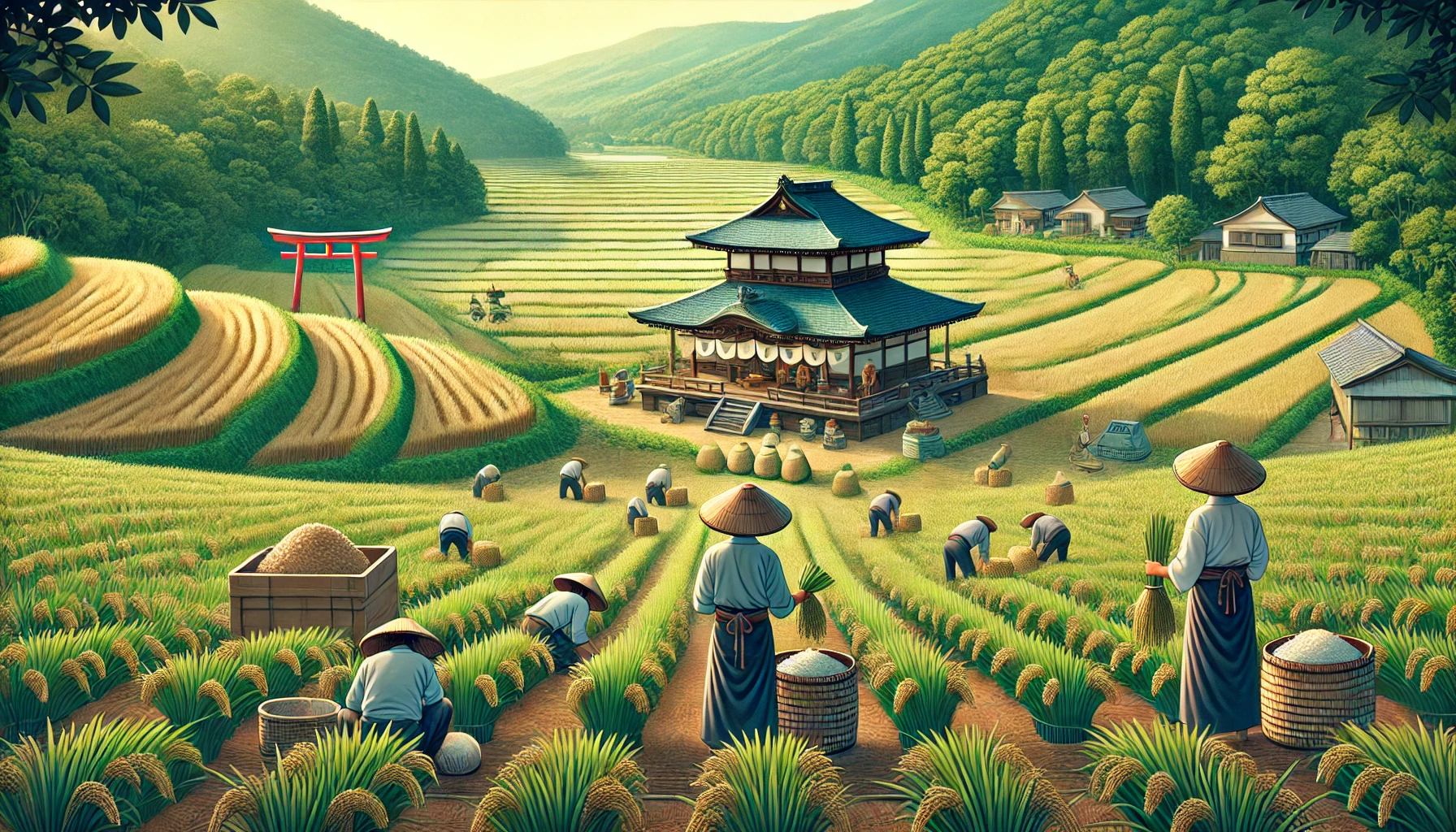
米は日本文化において非常に重要な役割を果たしています。
Rice plays a very important role in Japanese culture.
古代から米は主食として日本人の生活の中心でした。
Since ancient times, rice has been a staple food and central to Japanese life.
また、農業の基本であり、経済や社会にも大きな影響を与えてきました。
It has also been the basis of agriculture and has had a significant impact on the economy and society.
米は単に食べ物としてだけではなく、神道や仏教の儀式にも深く関わっています。
Rice is not only a food, but is also deeply involved in Shinto and Buddhist rituals.
たとえば、正月には鏡餅を飾り、秋には収穫を祝う祭りで新米を神様に捧げます。
For example, Kagamimochi (mirror-shaped rice cakes) are displayed at New Year's, and in autumn, new rice is offered to the gods at festivals celebrating the harvest.
さらに、結婚式やお祭りでは、酒(米から作られる日本酒)もよく使われます。
Furthermore, sake (Japanese rice wine made from rice) is often used at weddings and festivals.
これらの行事では、米は豊穣や感謝を象徴するものとされています。
In these events, rice symbolizes fertility and gratitude.
日常生活でも、米は特別な存在です。
Rice also has a special place in our daily lives.
和食には欠かせない白ご飯、おにぎり、寿司、餅など、多くの料理に米が使われています。
Rice is used in many dishes, including white rice, rice balls, sushi, and rice cakes, which are an essential part of Japanese cuisine.
また、「ご飯」という言葉は「食事」を意味するほど、日本人にとって米は身近で重要なものです。
Rice is also so familiar and important to the Japanese that the word "rice" means "meal.
近年、パンやパスタなどの消費が増えてきましたが、それでも米は日本人の心の中で特別な位置を保ち続けています。
In recent years, consumption of bread and pasta has increased, but rice still retains a special place in the hearts of the Japanese.
米はただの食材ではなく、日本の歴史、文化、そして人々の心に深く根付いた存在なのです。
Rice is not just a foodstuff; it is deeply rooted in Japanese history, culture, and people's hearts.
Comprehension Check
Question 1 of 4
米は食べ物以外にどんな場面と関わっていますか?