日本語のオノマトペ
Japanese Onomatopoeia
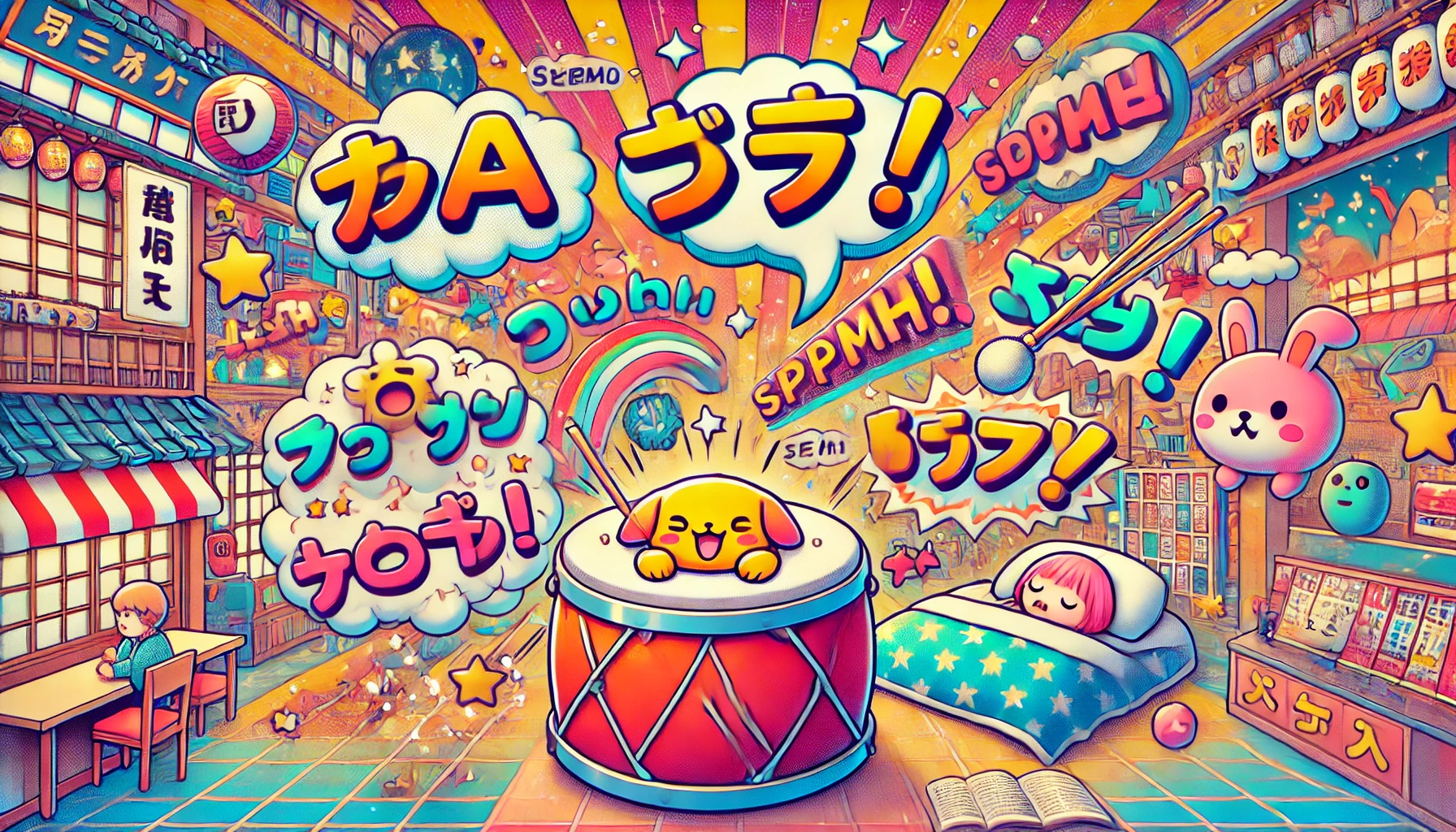
日本語のオノマトペは、日常生活でとてもよく使われています。
Japanese onomatopoeia are very common in everyday life.
オノマトペとは、物の音や動きを表現する言葉のことで、「擬音語」と「擬態語」に分けられます。
Onomatopoeia refers to words that describe the sound or movement of objects, and can be divided into "onomatopoeia" and "mimetic words."
たとえば、「ドンドン」という言葉は太鼓の音や強く何かを叩く音を表します。
For example, the word "don-don" describes the sound of a drum or the sound of hitting something hard.
一方、「ワクワク」という言葉は、心が弾むような期待感や楽しみを表現します。
On the other hand, the word "waku-waku" expresses a sense of anticipation or enjoyment that makes one's heart skip a beat.
オノマトペの面白いところは、意味が直感的に伝わることです。
The interesting thing about onomatopoeia is that it conveys meaning intuitively.
たとえば、「キラキラ」は星や宝石のように光る様子を表し、「ぐっすり」は深く眠る状態を表します。
For example, "kira-kira" describes a star or jewel shining brightly, while "gussuri" describes a state of deep sleep.
これらの言葉を使うことで、より生き生きとした表現が可能になります。
Using these words allows for more vivid expressions.
さらに、日本語のオノマトペは、会話だけでなく漫画やアニメでも頻繁に登場します。
Furthermore, Japanese onomatopoeia appears frequently not only in conversation but also in manga and anime.
キャラクターの感情や動きを強調するために使われることが多いです。
It is often used to emphasize the emotions and movements of characters.
このように、日本文化の中でオノマトペは非常に重要な役割を果たしています。
Thus, onomatopoeia plays a very important role in Japanese culture.
もしオノマトペを覚えたいなら、日常会話やメディアで出てくる言葉に注目すると良いでしょう。
If you want to learn onomatopoeia, pay attention to words that appear in everyday conversation or in the media.
自然にその意味や使い方が分かるようになります。
You will naturally come to understand its meaning and usage.
オノマトペを上手に使うことで、あなたの日本語もより豊かになるはずです。
Your Japanese language will be enriched by skillful use of onomatopoeia.
Comprehension Check
Question 1 of 4
オノマトペは本文でどのように分類されていますか?