磁気浮上式鉄道
Maglev Trains
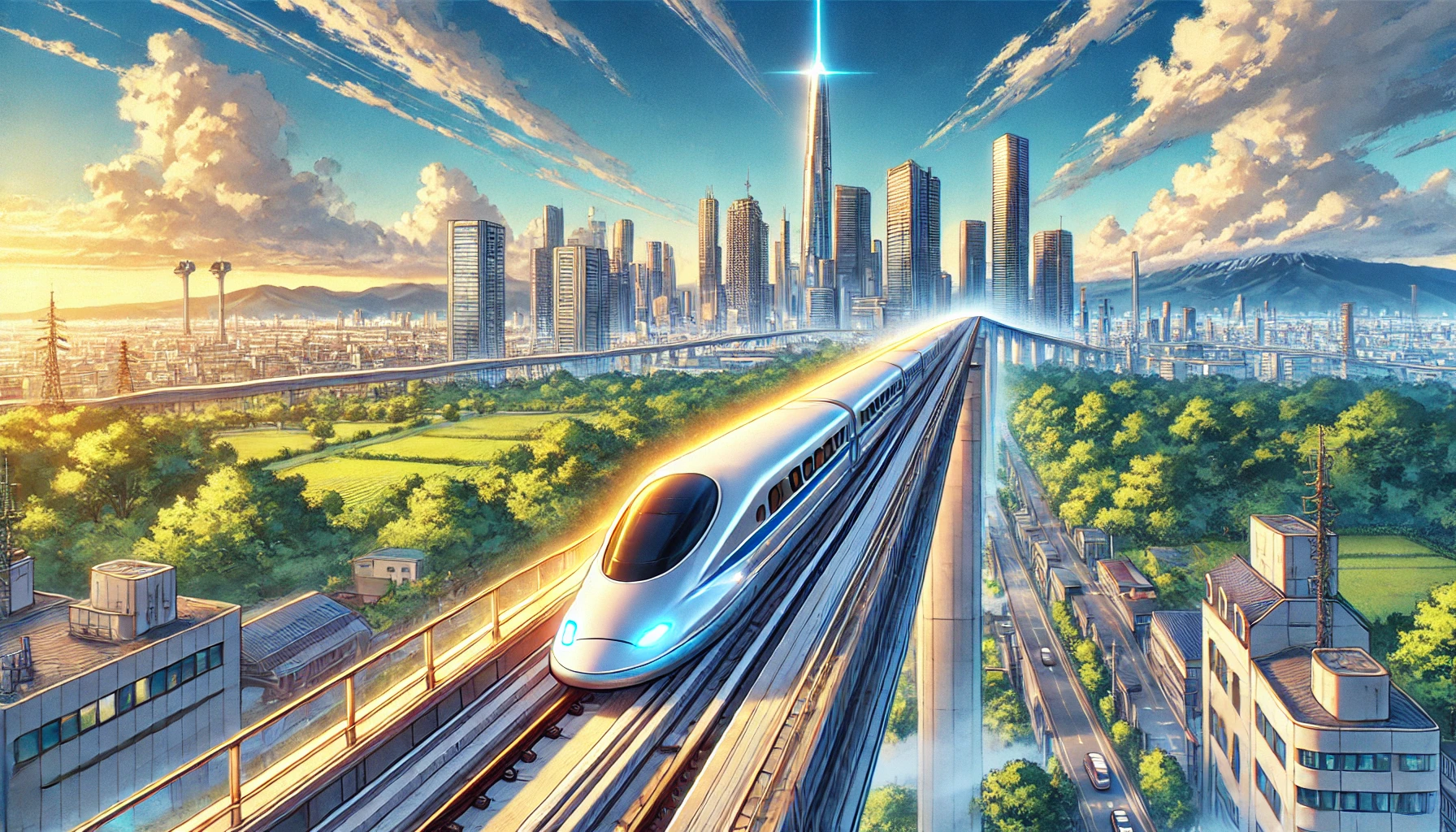
磁気浮上式鉄道(リニアモーターカー)は、磁力を利用して車両を浮上させ、高速で移動する次世代の交通手段です。
Magnetic levitation trains (linear motor cars) are a next-generation means of transportation that uses magnetic force to levitate the vehicle and move it at high speed.
従来の鉄道と異なり、車輪がなくレールとの摩擦が生じないため、極めて滑らかな運行が可能です。
Unlike conventional railroads, there are no wheels and no friction with the rails, resulting in extremely smooth operation.
この技術により、時速500キロ以上の速度を実現し、都市間の移動時間を大幅に短縮することが期待されています。
This technology is expected to enable speeds of 500 km/h or more and significantly reduce travel time between cities.
日本では、中央新幹線プロジェクトが進行中で、東京と名古屋を結ぶリニアモーターカーの開通が計画されています。
In Japan, the Chuo Shinkansen project is underway, with plans to open a linear motor car line connecting Tokyo and Nagoya.
この路線は、約40分で両都市を行き来できるようになると言われています。
It is said that this line will enable travel between the two cities in about 40 minutes.
さらに、将来的には大阪まで延伸される予定です。
Furthermore, the line will be extended to Osaka in the future.
磁気浮上式鉄道の特徴の一つは、環境への配慮です。
One of the features of magnetic levitation railroads is their environmental friendliness.
電力を効率的に使用し、排出ガスがほとんどないため、地球温暖化対策にも貢献すると考えられています。
Since it uses electricity efficiently and produces almost no emissions, it is believed to contribute to the fight against global warming.
ただし、建設費や維持費が非常に高額であること、また一部地域では騒音や環境破壊が懸念されていることも事実です。
However, it is also true that construction and maintenance costs are extremely high, and in some areas there are concerns about noise and environmental damage.
このように、磁気浮上式鉄道は技術的な進歩を象徴する存在でありながら、社会や環境との調和が求められる課題でもあります。
Thus, while magnetic levitation railroads represent a technological advancement, they also represent a challenge that requires harmony with society and the environment.
今後、この革新的な交通手段がどのように発展していくのか、多くの人々の関心を集めています。
How this innovative means of transportation will develop in the future is of great interest to many people.
Comprehension Check
Question 1 of 4
磁気浮上式鉄道が滑らかに高速走行できる理由は何ですか?