神道
Shinto
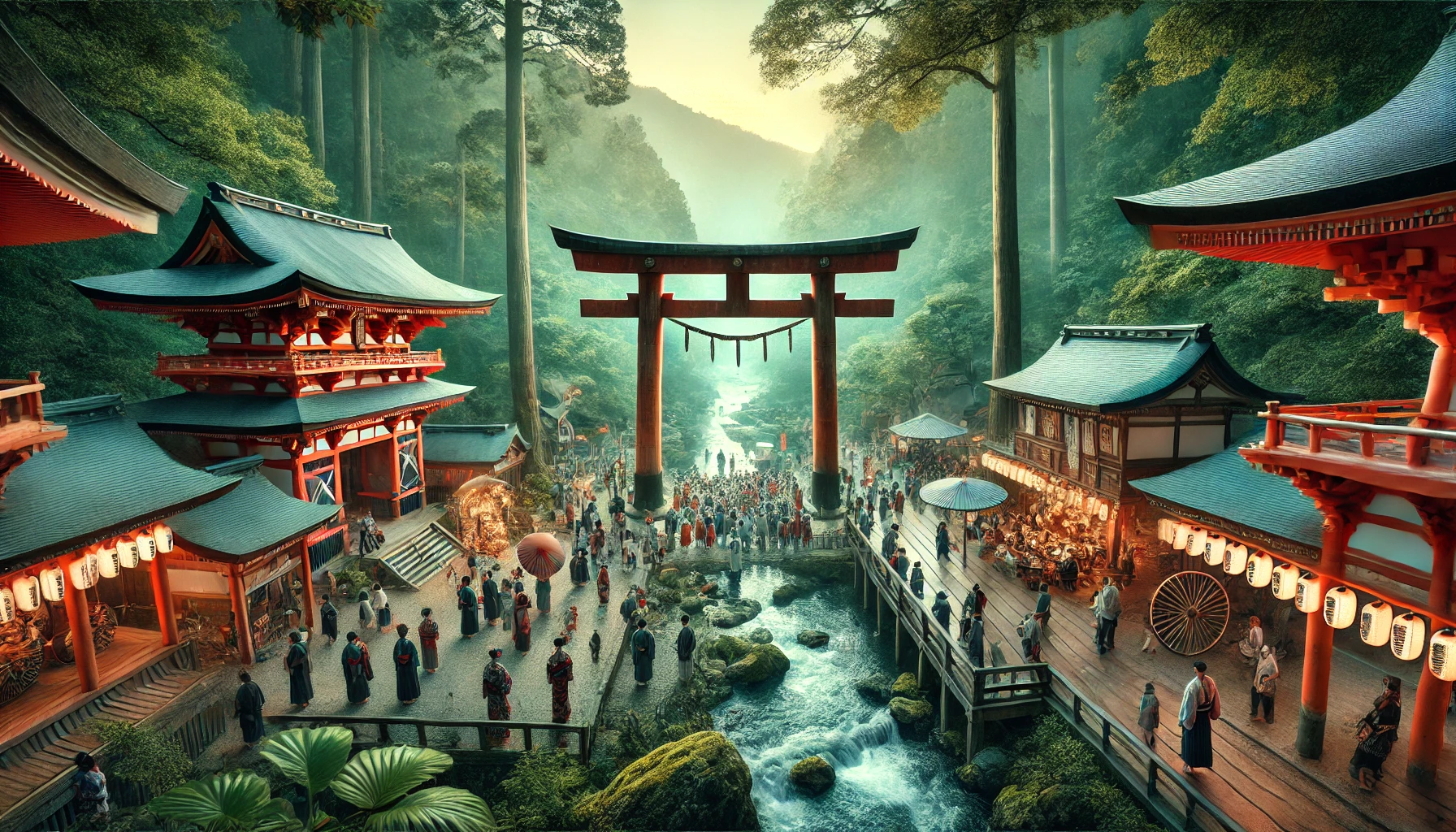
神道は、日本固有の宗教であり、古代から続く信仰の形態です。
Shinto is a religion unique to Japan and a form of faith that has been practiced since ancient times.
自然崇拝や祖先崇拝を基盤とし、多神教的な特徴を持っています。
It is based on nature worship and ancestor worship, and is characterized as polytheistic.
その中心には、神(かみ)と呼ばれる霊的存在への敬意と感謝の念があります。
At its core is respect and gratitude for spiritual beings called kami, or gods.
神道の神は、山や川、森、海といった自然界の要素だけでなく、歴史的な人物や土地にも宿るとされています。
Shinto deities are believed to reside not only in natural elements such as mountains, rivers, forests, and oceans, but also in historical figures and lands.
神道の重要な儀式には、祓いや祭りがあります。
Important Shinto rituals include purification and festivals.
祓いは、穢れを清めるための儀式であり、神社で行われることが一般的です。
Purification is a ceremony to cleanse the body of impurities and is usually held at shrines.
一方、祭りは地域ごとに特徴があり、神を迎えるための踊りや音楽、行列などが含まれます。
Festivals, on the other hand, are unique to each region and include dancing, music, and processions to welcome the gods.
これらの祭りを通じて、人々は神と交流し、地域社会の結束を深めます。
Through these festivals, people interact with the deities and deepen community cohesion.
また、神社は神道の信仰の中心地です。
Shrines are also centers of Shinto belief.
鳥居をくぐることで、現世と神域の境界を越えるとされています。
It is believed that by passing through the torii gate, one crosses the boundary between this world and the Shinto realm.
神社の境内には、拝殿や本殿、手水舎などがあり、訪れた人々はお参りや絵馬の奉納を行います。
Within the shrine precincts are the hall of worship, the main hall of worship, and a water closet, where visitors pay their respects and offer votive votive ema (votive picture tablet).
結婚式や七五三といった人生儀礼も、神道の神社で行われることが多いです。
Life rituals such as weddings and Shichi-Go-San are also often held at Shinto shrines.
神道は宗教としての戒律や教典を持たないため、信仰の形は柔軟であり、他の宗教との共存が可能です。
Since Shinto does not have precepts or scriptures as a religion, the form of belief is flexible and can coexist with other religions.
この特徴により、多くの日本人は神道を日常生活の一部として受け入れつつ、仏教やキリスト教の行事にも参加します。
This characteristic allows many Japanese to accept Shinto as part of their daily lives while also participating in Buddhist and Christian observances.
このような寛容性が、神道を現代の日本社会に深く根付かせている要因の一つといえるでしょう。
This tolerance is one of the factors that make Shinto deeply rooted in contemporary Japanese society.
神道を理解することは、日本の文化や価値観を理解するうえで重要です。
Understanding Shinto is important to understanding Japanese culture and values.
自然と人間、そして目に見えない存在との調和を大切にする神道の精神は、今日でも日本人の生活や考え方に大きな影響を与えています。
The spirit of Shinto, which emphasizes harmony between nature, humans, and unseen entities, continues to have a profound influence on the way Japanese people live and think today.
Comprehension Check
Question 1 of 4
神道における「神」は本文でどのような存在として説明されていますか?