福島第一原子力発電所事故
The Fukushima Nuclear Accident
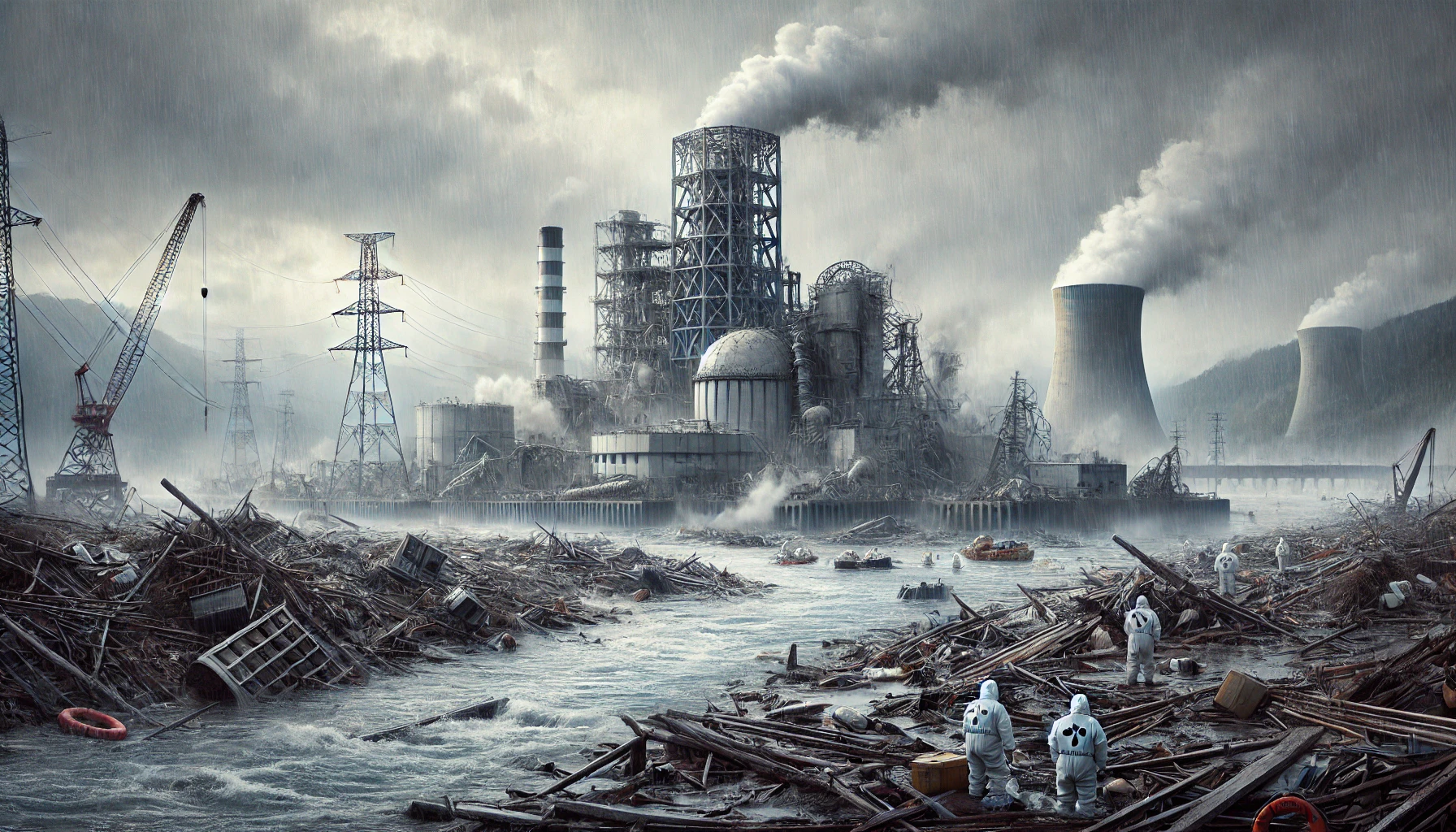
福島第一原子力発電所事故は、2011年3月11日に発生した東日本大震災に伴う大津波が直接的な原因となり、日本史上最悪の原子力災害として知られている。
The Fukushima Daiichi Nuclear Power Plant accident is known as the worst nuclear disaster in Japan's history, directly caused by the massive tsunami that followed the Great East Japan Earthquake on March 11, 2011.
この事故は、国際原子力事象評価尺度(INES)で最悪のレベル7に分類され、チェルノブイリ事故と同等の深刻度とみなされている。
The accident is classified as Level 7 on the International Nuclear Event Scale (INES), the worst level, and is considered as serious as the Chernobyl accident.
事故当時、地震によって原子力発電所の運転は自動停止したものの、津波による浸水が非常用電源を含む施設内の重要な設備を破壊し、冷却機能が失われた。
At the time of the accident, the earthquake caused an automatic shutdown of the nuclear power plant, but the flooding from the tsunami destroyed critical equipment at the facility, including the emergency power supply, and the cooling system was lost.
その結果、炉心溶融や水素爆発が発生し、大量の放射性物質が環境中に放出された。
As a result, a core meltdown and hydrogen explosion occurred, releasing a large amount of radioactive materials into the environment.
これにより、周辺地域の住民は避難を余儀なくされ、現在に至るまで多くの人々が故郷に戻ることができない状況が続いている。
As a result, residents of the surrounding areas were forced to evacuate, and to this day, many have been unable to return to their homes.
この事故は日本国内外に深刻な影響を与えた。
The accident had serious repercussions in Japan and abroad.
まず、日本のエネルギー政策に大きな転換を迫り、多くの原子力発電所が停止または廃炉の方向に進んだ。
First, it forced a major shift in Japan's energy policy, leading to the shutdown or decommissioning of many nuclear power plants.
また、福島県やその近隣地域の農産物や海産物に対する風評被害が広がり、地元経済に大きな打撃を与えた。
In addition, the spread of harmful rumors about agricultural and marine products from Fukushima Prefecture and neighboring areas dealt a serious blow to the local economy.
さらに、国際社会からは日本の原子力安全規制や災害対応能力に対する厳しい批判が寄せられた。
In addition, the international community came in for harsh criticism of Japan's nuclear safety regulations and disaster response capabilities.
一方で、この事故を契機に放射線防護や災害復興に関する研究が進み、多くの教訓が得られたことも事実である。
On the other hand, the accident also served as an opportunity to advance research on radiation protection and disaster recovery, and many lessons have been learned.
具体的には、原子力施設の耐震設計の見直しや津波対策の強化が行われ、災害時における情報公開の重要性が再認識された。
Specifically, the seismic design of nuclear facilities was reviewed, tsunami countermeasures were strengthened, and the importance of information disclosure in times of disaster was reaffirmed.
福島第一原子力発電所事故は、自然災害と人為的過失が複合的に絡み合った災害として、今後のエネルギー政策や原子力技術の在り方を考える上での重要な教訓を残している。
The Fukushima Daiichi Nuclear Power Plant accident, as a disaster involving a combination of natural disasters and human negligence, has left us with important lessons for future energy policy and nuclear technology.
この悲劇を二度と繰り返さないためにも、社会全体での持続可能なエネルギーシステムの構築と、地域復興への継続的な支援が求められている。
In order to prevent a repetition of this tragedy, the establishment of a sustainable energy system for society as a whole and continued support for regional reconstruction are required.
Comprehension Check
Question 1 of 4
地震後に原子炉が自動停止したにもかかわらず重大事故に至った直接的な仕組みは何ですか?