金継ぎ
Kintsugi
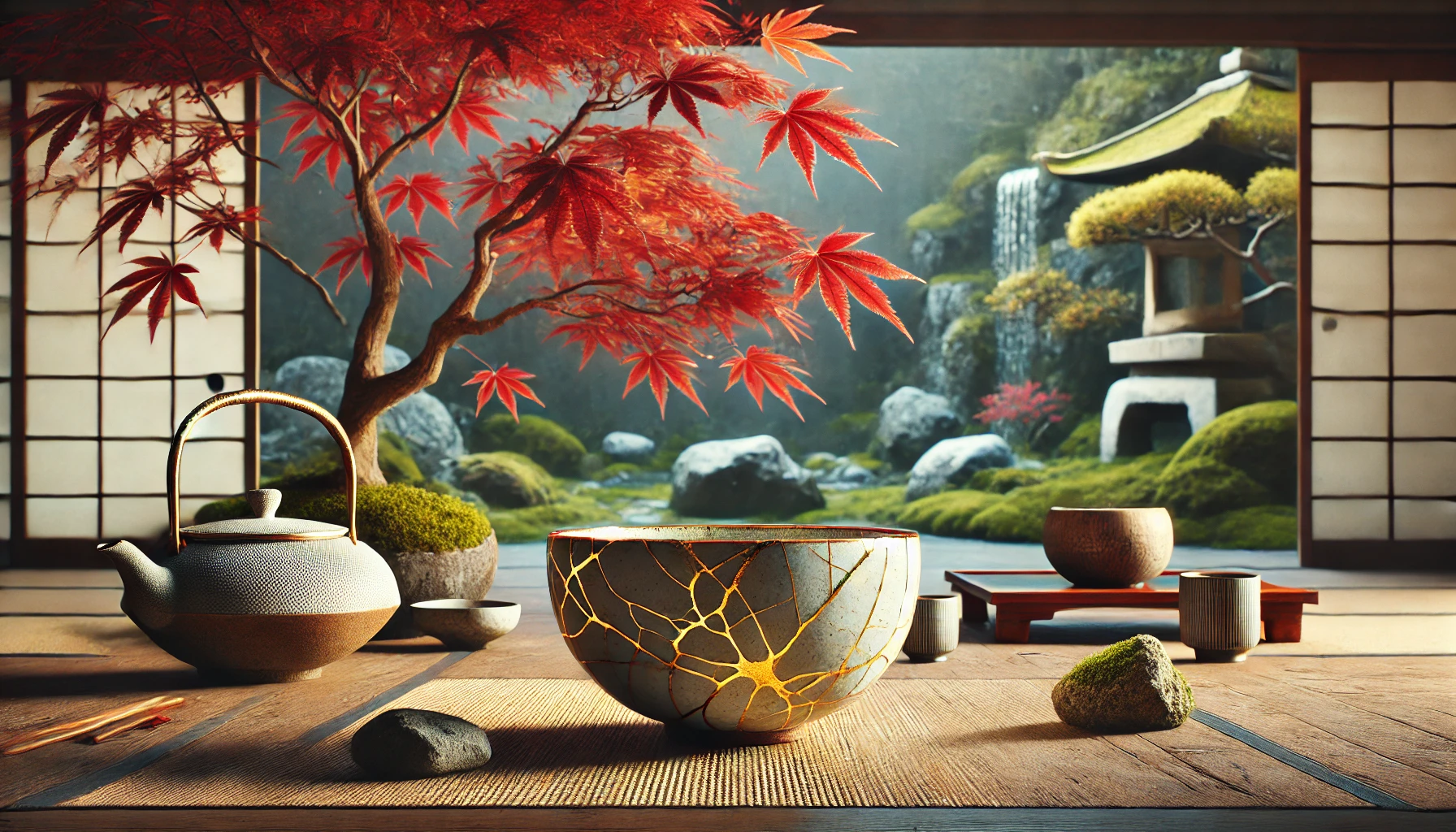
金継ぎは、日本の伝統的な修復技術であり、壊れた陶器を修復する際に、ただ元の形に戻すだけでなく、そのひび割れや欠けた部分を金や銀で装飾し、新たな美しさを生み出すことを目的としています。
Kintsugi is a traditional Japanese restoration technique that aims not only to restore broken pottery to its original form, but also to create new beauty by decorating the cracks and chips with gold or silver.
この技法は、日本の美意識や哲学を反映しており、不完全さや欠陥を否定するのではなく、それを受け入れ、新たな価値として昇華させる考え方が基盤となっています。
This technique reflects the Japanese aesthetic sense and philosophy, which is based on the idea of accepting imperfections and flaws rather than denying them and sublimating them into new values.
金継ぎの起源は室町時代にさかのぼるとされています。
The origin of kintsugi is said to date back to the Muromachi period (1336-1573).
当時、茶道の文化が発展する中で、高価な茶器が割れることが珍しくありませんでした。
At that time, as the culture of the tea ceremony developed, it was not uncommon for expensive tea utensils to break.
しかし、完全に修復された茶器を再び使うことで、それ自体が物語を持つ一つの芸術作品と見なされるようになったのです。
However, a fully restored tea utensil could be used again, and it came to be regarded as a work of art with a story of its own.
特に、金継ぎによって修復された器は、傷跡が「景色」として評価され、より味わい深いものとなります。
In particular, the vessel restored by kintsugi has become more tasteful, as the scars are appreciated as "scenery".
金継ぎはまた、日本人の「ものを大切にする心」にも通じています。
Kintsugi is also connected to the Japanese spirit of valuing things.
物を単に捨てるのではなく、修理して使い続ける姿勢は、現代社会においても重要なメッセージを含んでいます。
The attitude of not simply throwing things away but repairing them and continuing to use them has an important message for today's society as well.
大量消費の時代にあって、この伝統的な修復技術は、持続可能性や環境保護の観点からも注目されています。
In this age of mass consumption, this traditional restoration technique is also attracting attention from the perspectives of sustainability and environmental protection.
さらに、金継ぎは単なる技術以上の意味を持ちます。
Furthermore, kintsugi is more than just a technique.
ひび割れを隠すのではなく強調することで、人生の困難や失敗を新たな始まりとして捉える哲学を象徴していると言えるでしょう。
By highlighting cracks rather than hiding them, kintsugi symbolizes a philosophy that sees life's difficulties and failures as new beginnings.
そのため、金継ぎは日本国内のみならず、世界中の人々に感動を与え、広く知られるようになりました。
As a result, kintsugi has become widely known, inspiring people not only in Japan but also throughout the world.
このように、金継ぎは伝統工芸であると同時に、日本独自の美意識と哲学を象徴する文化的な表現でもあります。
Thus, Kintsugi is not only a traditional craft, but also a cultural expression that symbolizes Japan's unique aesthetic sense and philosophy.
壊れたものに新しい命を吹き込むその精神は、今後も多くの人々に影響を与え続けることでしょう。
Its spirit of breathing new life into broken things will continue to influence many people in the future.
Comprehension Check
Question 1 of 4
金継ぎの修復は、単に元の状態へ戻すこととどう異なりますか?